
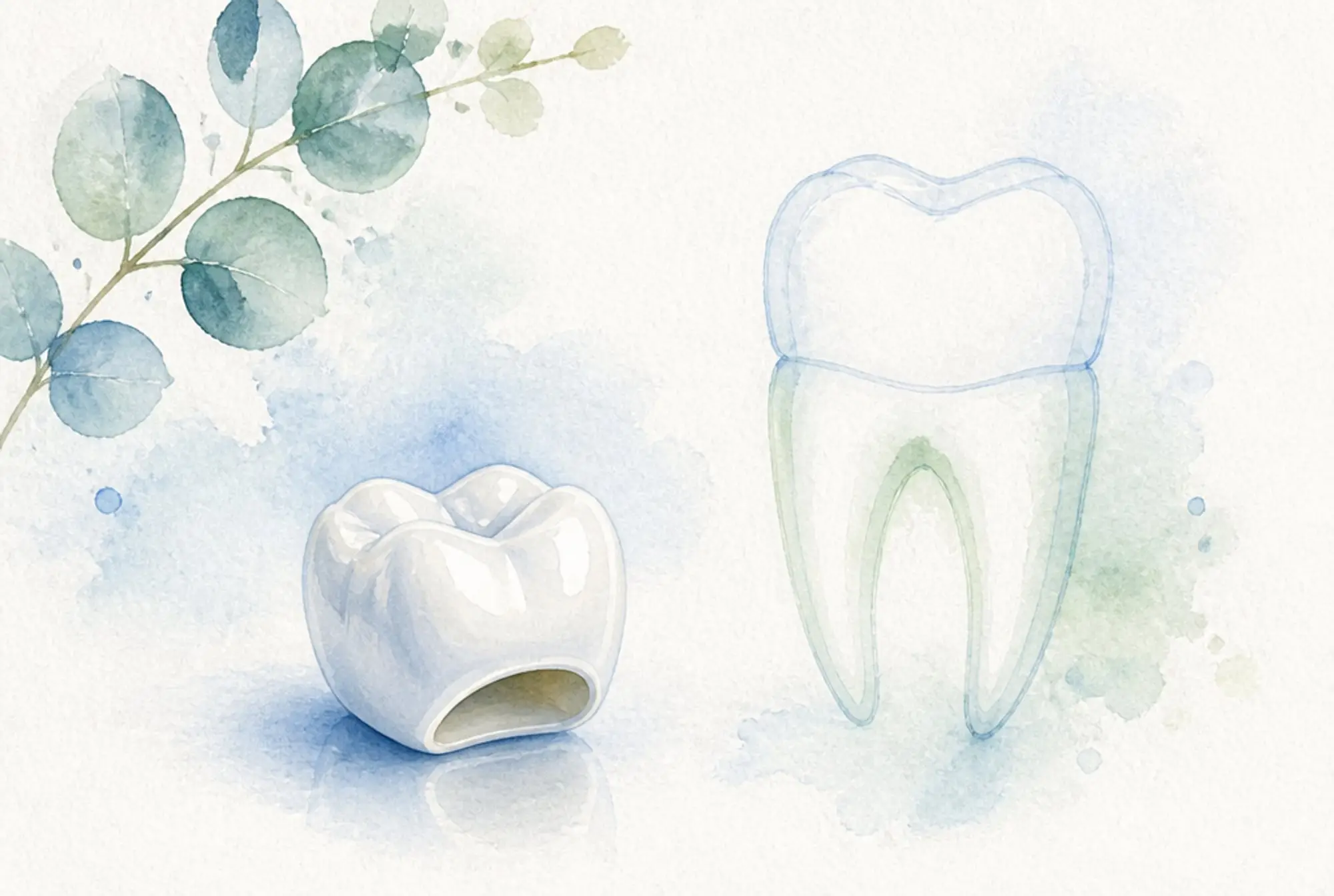
If a dentist has mentioned the word “crown” to you, the first thing to know is that it is one of the most routine restorations in dentistry, and getting one is a calm, predictable process. Nobody at Smile Arts Dental will rush you into it. Here are plain answers to the questions patients ask most.
What is a dental crown?
A dental crown is a small cap placed over the top of a tooth that is broken, damaged, weak, cracked, or decayed. It restores the tooth’s shape and strength and shields what remains of it from further harm.
Crowns can be fabricated from metal, resin, ceramic, porcelain, or a compound material. Modern non-metal crowns are made to look like the natural teeth around them, so a crowned tooth blends into your smile rather than standing out from it.
Crowns typically require two visits over the course of a few weeks. At the first, Dr. Balaban prepares the tooth and takes the impressions a dental lab uses to craft your custom crown; at the second, the finished crown is fitted and placed. You leave each visit knowing exactly what comes next, which is how Fear-Less Dentistry works in practice.
What is the difference between a crown and a bridge?
The two are often confused because a bridge is built from crowns. The distinction comes down to whether the tooth is still there.
A crown repairs a tooth that is damaged but present. In many cases, placing a crown means the tooth does not need to be extracted and replaced with an implant.
A dental bridge replaces a tooth that is missing. Crowns are placed over the healthy teeth on either side of the gap, and those anchor a prosthetic tooth that fills the empty space. Dr. Balaban may recommend a bridge if you have lost a tooth, and a crown if a troubled tooth can still be saved.
When do you need a dental crown?
Dr. Balaban may recommend a crown if you have:
- A weak, damaged, broken, or worn-down tooth
- A cracked tooth
- A severely stained or discolored tooth
- A decayed tooth
- A tooth that has had root canal therapy
- A dental bridge that needs anchor teeth
The root canal case deserves a special note, because it is the one patients least expect. After a root canal, the treated tooth is more brittle than before, and a crown protects it and reduces the risk of future damage. The crown is what lets that tooth keep working for years.
Find out if a crown is right for your tooth
The only way to know whether a tooth needs a crown is to have it examined. Dr. Balaban can take the necessary X-rays, look at the tooth with you, and walk through the options at whatever pace feels comfortable. Call Smile Arts Dental in Carmel at (317) 575-1995 or request an appointment online, and we will find a time that works.
This article is for general education only and is not a substitute for professional dental advice. For guidance about your own smile, talk with your dentist.