
Services
Dental Crowns in Carmel, IN
When a filling is no longer enough, a crown restores the whole tooth to its natural shape and strength.

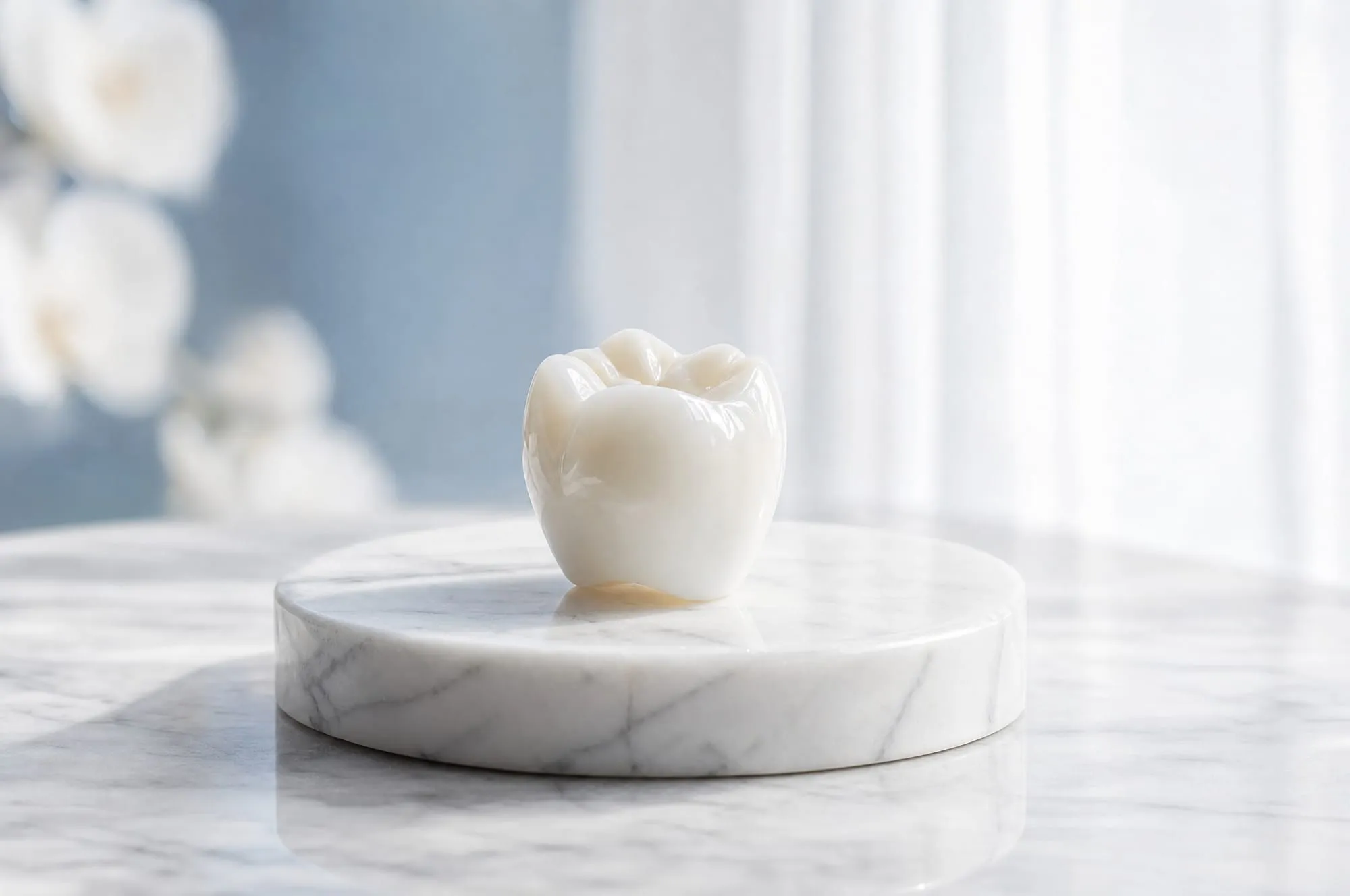
Most damaged teeth are restored with fillings. But when decay or a fracture has taken too much of a tooth’s structure for a filling to hold, the tooth needs something that does more than patch it. A crown, sometimes called a cap, covers the tooth entirely and restores it to its natural shape and size.
When a crown is the right answer
Crowns solve a specific set of problems, and Dr. Balaban will tell you plainly whether yours is one of them:
- Restoring a tooth that can no longer support a large filling
- Protecting a weak tooth from fracturing, or restoring one that already has
- Anchoring a dental bridge
- Covering a badly shaped or deeply discolored tooth
- Topping a dental implant with its final visible tooth
What the process looks like
Fitting a crown generally takes at least two visits, and the pace is deliberate. At the first visit the tooth is shaped, an impression is taken, and a temporary crown protects the tooth while your permanent one is crafted to match your bite and the color of its neighbors. At the second visit the permanent crown is fitted, adjusted until it feels like it was always there, and cemented in place.
The result is a permanent covering that strengthens the tooth and improves its appearance at the same time. With normal brushing, flossing, and regular cleanings, crowns serve for many years.
Comfort, as always, comes first
Crown work is routine at Smile Arts Dental, but no procedure here is treated as routine for the patient in the chair. Every step is explained before it happens, numbing gets unhurried attention, and if dental visits are hard for you, comfort options are part of the plan. That is what Fear-Less Dentistry means in practice.
Smile Arts Dental restores teeth for patients from Carmel, Westfield, Zionsville, and north Indianapolis. Call (317) 575-1995 or request an appointment online.
Common questions
How many visits does a crown take? +
Generally at least two. At the first, the tooth is shaped, an impression is taken, and a temporary crown protects the tooth. At the second, the permanent crown is fitted, adjusted to your bite, and cemented in place.
When is a crown needed instead of a filling? +
When too much of the tooth's structure is gone for a filling to hold. Crowns also protect weak or fractured teeth, anchor bridges, cover badly shaped or discolored teeth, and top dental implants. If a filling would serve, you will be told so; a crown is never the default.
How long do crowns last? +
With ordinary care, many years, often a decade or more. Brushing, flossing, and regular cleanings protect the tooth under the crown, which is what actually determines its lifespan. Avoid chewing ice and using your teeth as tools, and your crown will last longer.
Related care