
Teeth grinding has an unfair quality to it: it happens while you sleep, so you cannot decide to stop. Nobody chooses bruxism, and nobody should feel embarrassed by it. Most people find out from the evidence it leaves behind, which is why it helps to know what that evidence looks like.
What a custom night guard actually is
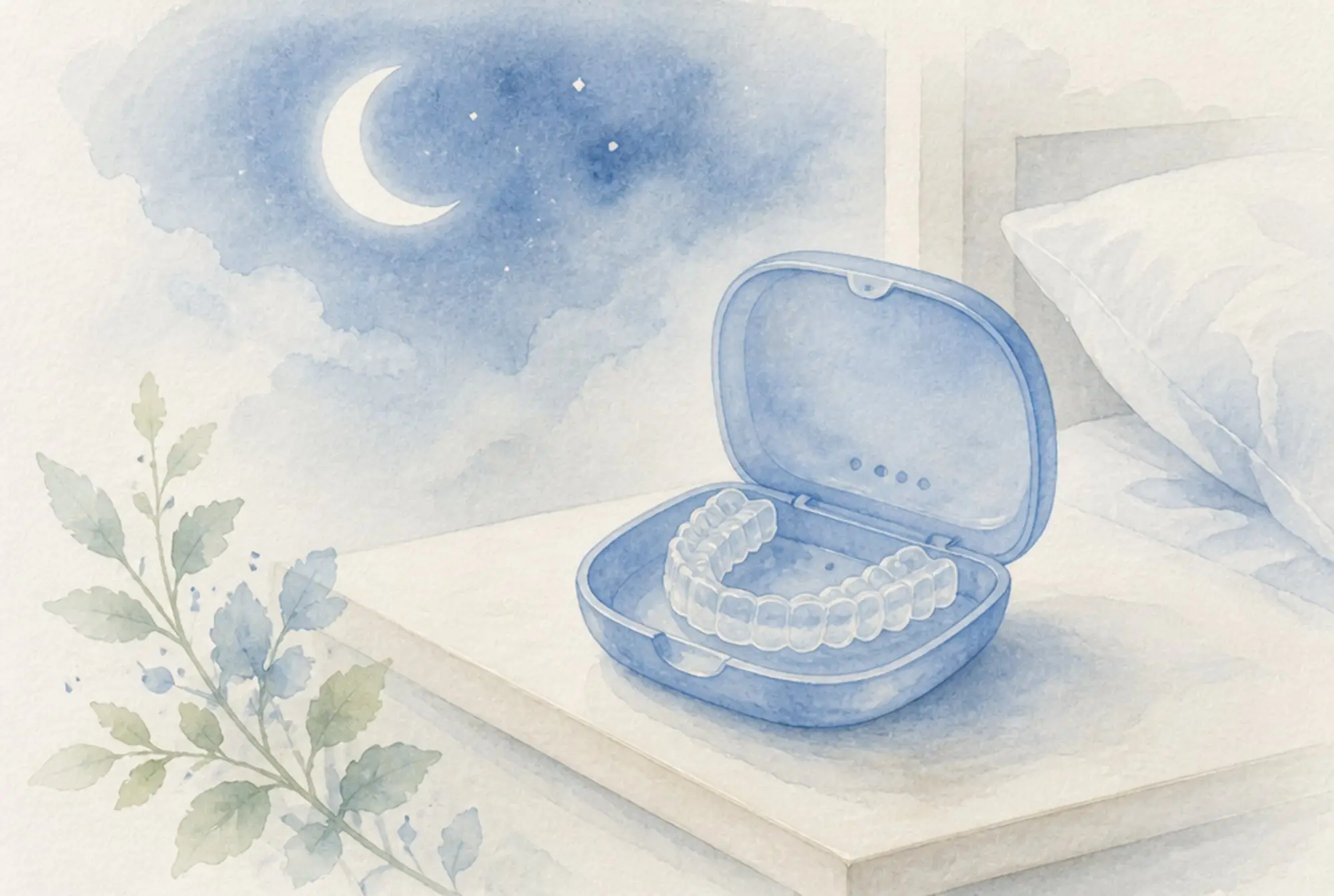
A custom night guard is a medical device, prescribed by a physician or dentist. It is a dental appliance fabricated to fit your teeth exactly, worn during sleep to protect your teeth and jaw from nighttime clenching and grinding. Because no one can watch themselves sleep, the path to one usually starts with symptoms. Dr. Balaban can examine your teeth and jaw and determine whether a custom night guard is the right answer for you.
Four signs worth a closer look
Morning jaw pain or stiffness. If you wake up with a stiff or sore jaw, tightness or tension in your face, trouble opening or closing your mouth or speaking, or a tension headache, you may be grinding your teeth or clenching your jaw in your sleep.
Tension headaches and earaches that keep returning. Recurring tension headaches and earaches are also a symptom of temporomandibular joint (TMJ) disorder. Over time, nighttime grinding and clenching can injure the muscles that support jaw movement, leading to inflammation, stiffness, and pain. That pain often refers outward, showing up as headaches, earaches, or an ache that runs along the jaw toward the ears and temples.
Tooth damage or new sensitivity. Grinding gradually wears teeth down. You may notice unexpected chips or cracks, or teeth that look shorter or flatter than they used to. As enamel wears away, sensitivity to hot and cold can appear suddenly or get worse.
Bites and marks inside your mouth. Waking up in pain because you bit your tongue overnight is a common clue, and so are cheek or lip injuries. Scalloped edges or small indentations along the sides of your tongue can also indicate that you were biting down in your sleep.
What a night guard can and cannot do
An honest note: a night guard will not stop you from grinding or clenching. What it does is reduce the wear, tear, and damage that grinding causes to your teeth and jaw, and lower your risk of waking up with pain and stiffness. That protection matters, because the damage from untreated bruxism adds up. Night guards also have a life beyond the bedroom, for athletes among others, and we cover that wider case in the benefits of custom mouth guards.
If this list sounds familiar
There is no cause for alarm here. Bruxism is common, and it responds well to treatment. Dr. Balaban identifies, diagnoses, and treats teeth grinding regularly, and he can help you find solutions that offer lasting relief while lowering your risk of complications down the road. The first visit is simply an exam and a conversation about what you have been noticing. Request an appointment online or call us at (317) 575-1995 to find out whether a custom night guard is a good fit for you.
This article is for general education only and is not a substitute for professional dental advice. For guidance about your own smile, talk with your dentist.