
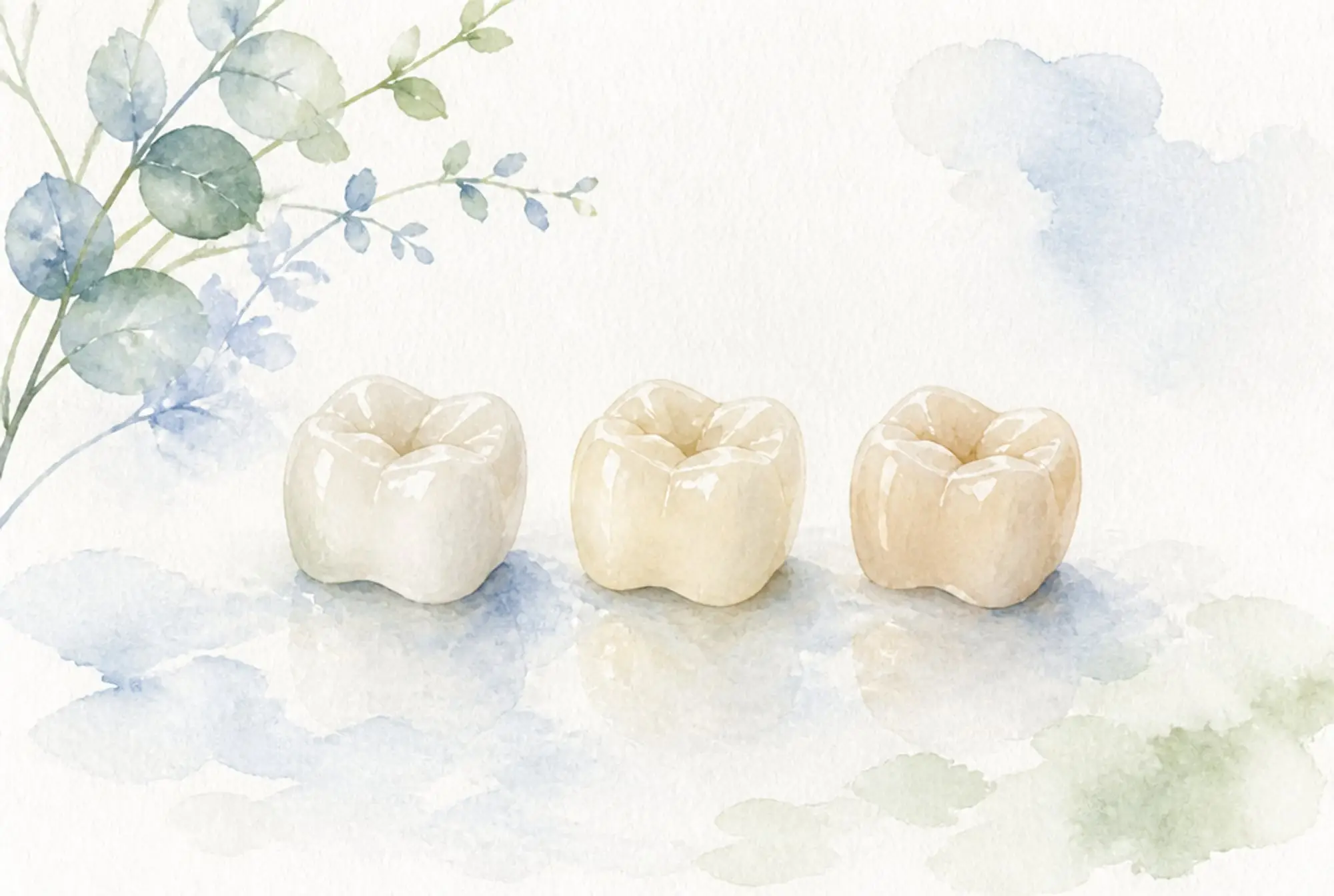
A dental crown is one of the most common ways to save a damaged tooth, but “crown” is not one single thing. Crowns are made from different materials, in different ways, for teeth that have been damaged in different ways. If you have been told you need one, here is the reassuring part: the choice is not yours to agonize over. It is a clinical decision Dr. Balaban works through with you, based on the tooth in question.
Start with the tooth, not the crown
It is tempting to compare crown types in the abstract and hunt for a single best answer. There is not one, and that is fine. A dental crown covers and protects what remains of a natural tooth after a crack, a break, or serious decay. Because the crown becomes part of how you bite, chew, and smile, the right one depends on where the tooth sits, how it was damaged, and what it needs to blend in with.
Three questions that shape the recommendation
How did the tooth break? A tooth that has fractured below the gum line calls for a different approach than one damaged above it. Where the break sits changes which kind of crown will hold up.
What should the crown be made of? Some situations call for a metal crown, and some patients simply prefer one. Others want a crown matched to the teeth around it. Material is a real decision, made per tooth rather than by default.
How hard is the shade to match? Some tooth shades are straightforward to reproduce and some are genuinely difficult. A hard-to-match shade influences which type of crown makes sense, especially where the tooth shows when you smile.
Each option has pros and cons, and weighing them is exactly what your dentist is for. You will not be handed a catalog and left to guess. You will get a recommendation and the reasons behind it.
The two visits, and why the wait is worth it
Whichever material is right, the process at our practice follows the same two-appointment shape. At the first visit, Dr. Balaban prepares the tooth and takes impressions. Those impressions go to a dental lab technician who fabricates your crown by hand for your specific tooth, which usually takes a few weeks depending on the lab’s schedule. At the second visit, the finished crown is delivered, and the tooth goes back to work.
The wait between visits is not a flaw in the process. It is a technician making one crown for one tooth in one mouth. For a fuller picture of what crowns involve at our office, our post on dental crowns in Carmel, Indiana goes deeper.
If a tooth is cracked or broken now
A cracked or broken tooth is worth seeing about quickly, before the damage spreads. Call us at (317) 575-1995 or request an appointment online. Dr. Balaban will examine the tooth, walk you through the options in plain language, and recommend the crown that fits it best.
This article is for general education only and is not a substitute for professional dental advice. For guidance about your own smile, talk with your dentist.