
If you feel self-conscious about the shape, color, size, or overall appearance of a tooth, Dr. Alex Balaban may suggest a dental crown. The word can sound clinical, but the idea is gentle: a crown covers and protects what is already yours, and thanks to advancements in dental materials, modern crowns look more natural than ever. Here is how one actually gets designed and made for you.
What a dental crown is
A dental crown is a small cap placed over a tooth to improve its shape, size, strength, and overall appearance. Crowns can be used cosmetically, or to protect a tooth after a root canal, another dental procedure, or an injury has threatened the structure of the tooth. Either way, the goal is the same: preserve your remaining natural tooth so an extraction never becomes necessary.
Designing a crown that looks like you
Crowns can be fabricated from stainless steel, metal, porcelain fused to metal, resin, ceramic, and porcelain. Most modern crowns are ceramic or porcelain, because those materials are durable, affordable, and look convincingly like natural enamel.
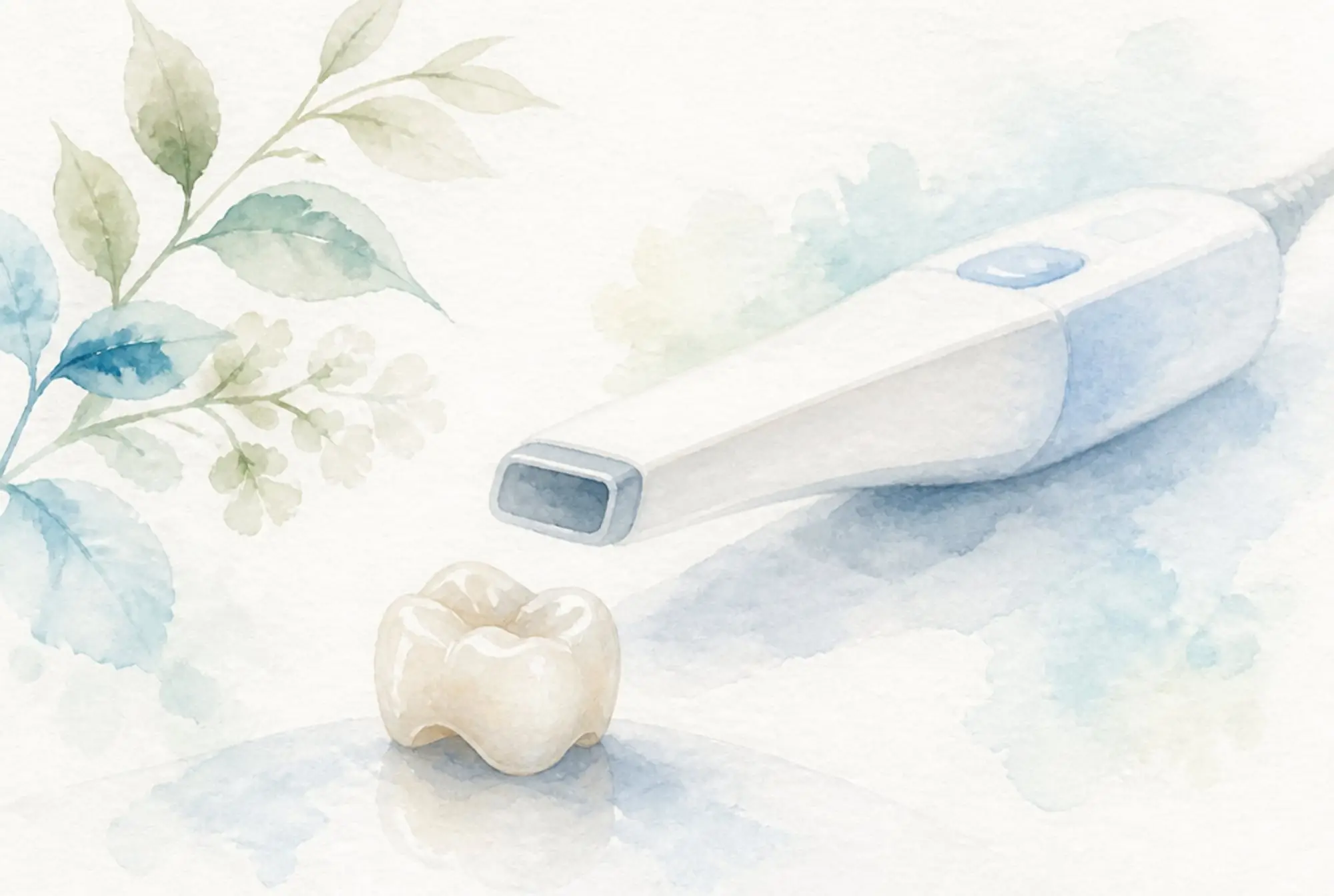
The design work is where the artistry happens. Dr. Balaban takes digital images of your tooth with a small hand-held scanner, which is quick and comfortable. Those images guide the shaping and shading of your crown so it fits well, looks natural, and does not stand out from the teeth around it. If your goal is mainly cosmetic and the tooth itself is healthy, it is also worth asking whether porcelain veneers would suit you better; that conversation is part of planning, never an upsell.
The honest timeline
We would rather tell you the truth than promise speed. A crown at our office takes two visits. At the first, the tooth is prepared, the digital scan is taken, and a temporary crown protects the tooth while your permanent one is carefully crafted. At the second, the final crown is checked, adjusted, and cemented so the fit feels right before you leave. Every step is explained before it happens, and you can pause us at any point. That is Fear-Less Dentistry applied to restorative care.
Who crowns can help
You may be a good candidate if a tooth has been affected by decay, injury, illness, or other damage. Crowns restore teeth that are broken, chipped, cracked, weak, misshapen, severely discolored, or small and insubstantial. Once placed, a crown is comfortable, virtually undetectable, and easy to care for; with proper care, crowns can last 15 years or more. Dr. Balaban’s experience in cosmetic and restorative dentistry means the result is planned around your whole smile, never a single tooth in isolation.
If a damaged or discolored tooth has been on your mind, finding out your options is easy. Call us at (317) 575-1995 or request an appointment, and we will take an honest look together.
This article is for general education only and is not a substitute for professional dental advice. For guidance about your own smile, talk with your dentist.