
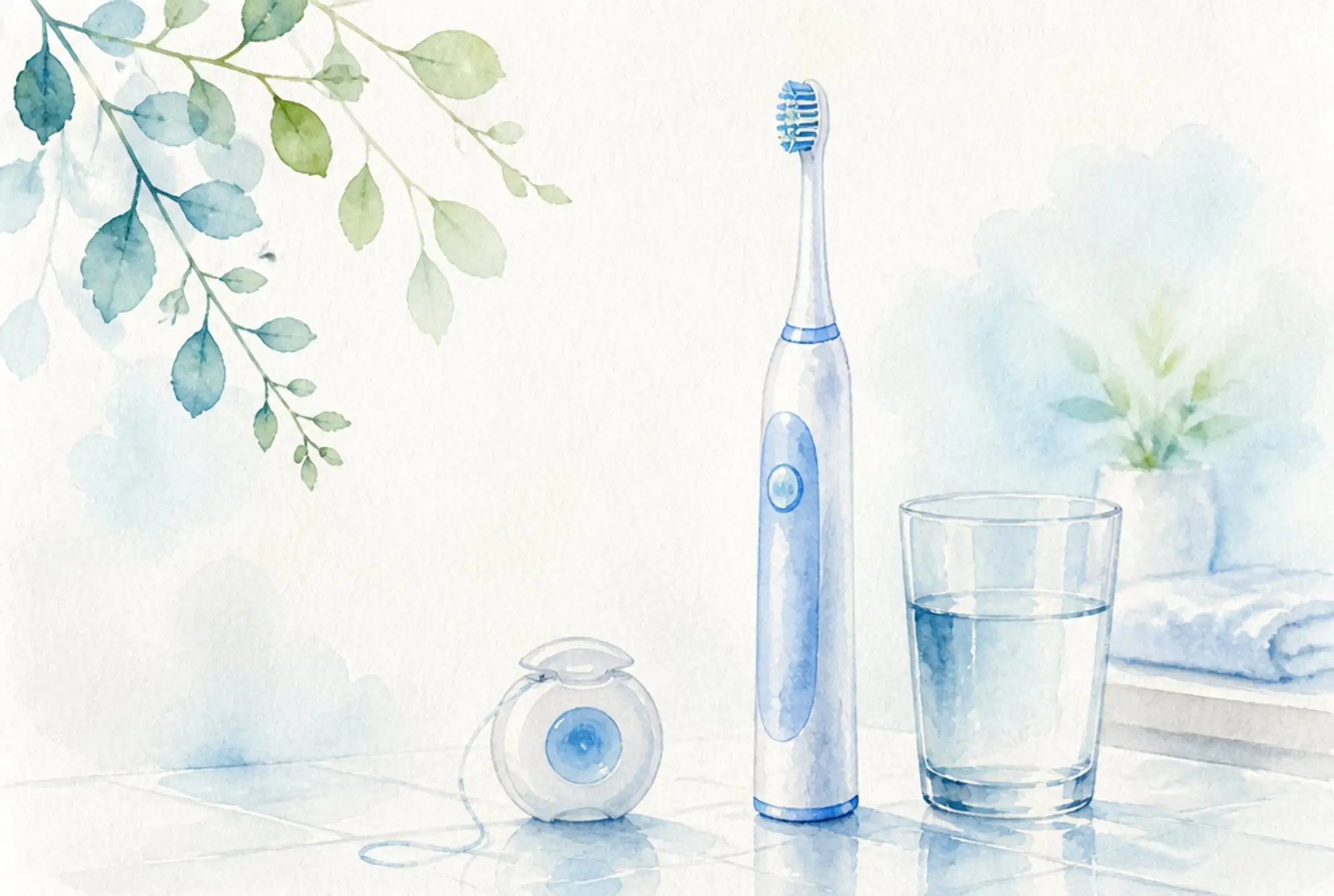
If your gums are sore, or you notice a little pink in the sink after brushing, take a breath before you worry. Bleeding gums are usually the first sign of early gum disease, and the early stage is the treatable stage. With a good home routine, early gum disease can be reversed, and even the more advanced stages can be arrested and managed. The habits involved are simple, and this post walks through the three that matter most.
Why your gums deserve the attention
Your gums are the foundation your teeth stand in, which is why Dr. Alex Balaban and our team keep coming back to gum hygiene. Left untreated, gum disease can lead to gum infections, loose teeth, and eventually tooth loss and bone loss. It has also been linked to conditions well beyond the mouth, including heart disease, diabetes, asthma, Alzheimer’s disease, kidney disease, osteoporosis, and cancer.
That list is not meant to alarm you. It is meant to make the routine below feel worth a few extra minutes a day, because gum disease caught early responds well to home care. And if your gums are already sore or swollen and you want to understand why before changing anything, our post on why gums get sore and swollen walks through the possible causes first.
The three-habit routine
1. Brush twice a day with an electric toothbrush
An electric toothbrush rotates faster than any hand can while staying gentle on gum tissue. The result is twofold: more plaque removed, and a lower risk of the gum recession that comes from scrubbing too hard by hand.
2. Floss at least once a day, the right way
Flossing only does its job if it reaches below the gum line. Curve the floss into a C shape around each tooth and slide it gently under the edge of the gums. If dexterity makes standard floss awkward, floss aids work well, and we are happy to recommend the ones best suited to you at your next visit.
3. Keep a cleaning schedule that fits your gums
Plaque you miss eventually calcifies into tartar, and tartar cannot be brushed or flossed away. Only dental instruments remove it. Professional cleanings clear it from below the gum line, and for gums that need more help, periodontal therapy can prevent, reverse, or arrest gum disease. The right interval is personal. Some patients do well coming in every six months; others need a visit every three or four. We will tell you plainly which schedule your gums are asking for.
Healthy gums now, your own teeth later
It is easy to assume dentures are simply waiting for you at a certain age. They are not. Take good care of your teeth and gums now and you can keep most, and often all, of your natural teeth for a lifetime.
If your gums bleed when you brush or floss, that is a reason to come in, never a reason to be embarrassed. It is one of the most common things we see. Call (317) 575-1995 or request an appointment for an exam and cleaning, and if you are new to the practice, our $79 new-patient special covers your exam and X-rays.
This article is for general education only and is not a substitute for professional dental advice. For guidance about your own smile, talk with your dentist.