
If a dentist has suggested a dental implant, the phrase “surgically placed” may be the only part you remember. That reaction is normal, and it deserves an answer before any procedure detail does: at Smile Arts Dental, comfort comes first, and Fear-Less Dentistry applies to implant work the same way it applies to a cleaning. One of the most reliable antidotes to worry is understanding, so this post takes an implant apart, piece by piece, and explains what each part is for.
What a dental implant actually is
A dental implant is an artificial tooth root placed into the jawbone to support a replacement tooth. It is made from a biocompatible material, most often titanium, which means the body accepts it and the surrounding bone gradually fuses with it. That fusion is what separates an implant from removable dentures or a traditional bridge. Instead of resting on the gums or leaning on neighboring teeth, an implant is anchored the way a natural tooth is, which makes it a permanent and secure answer to tooth loss.
The three parts of an implant
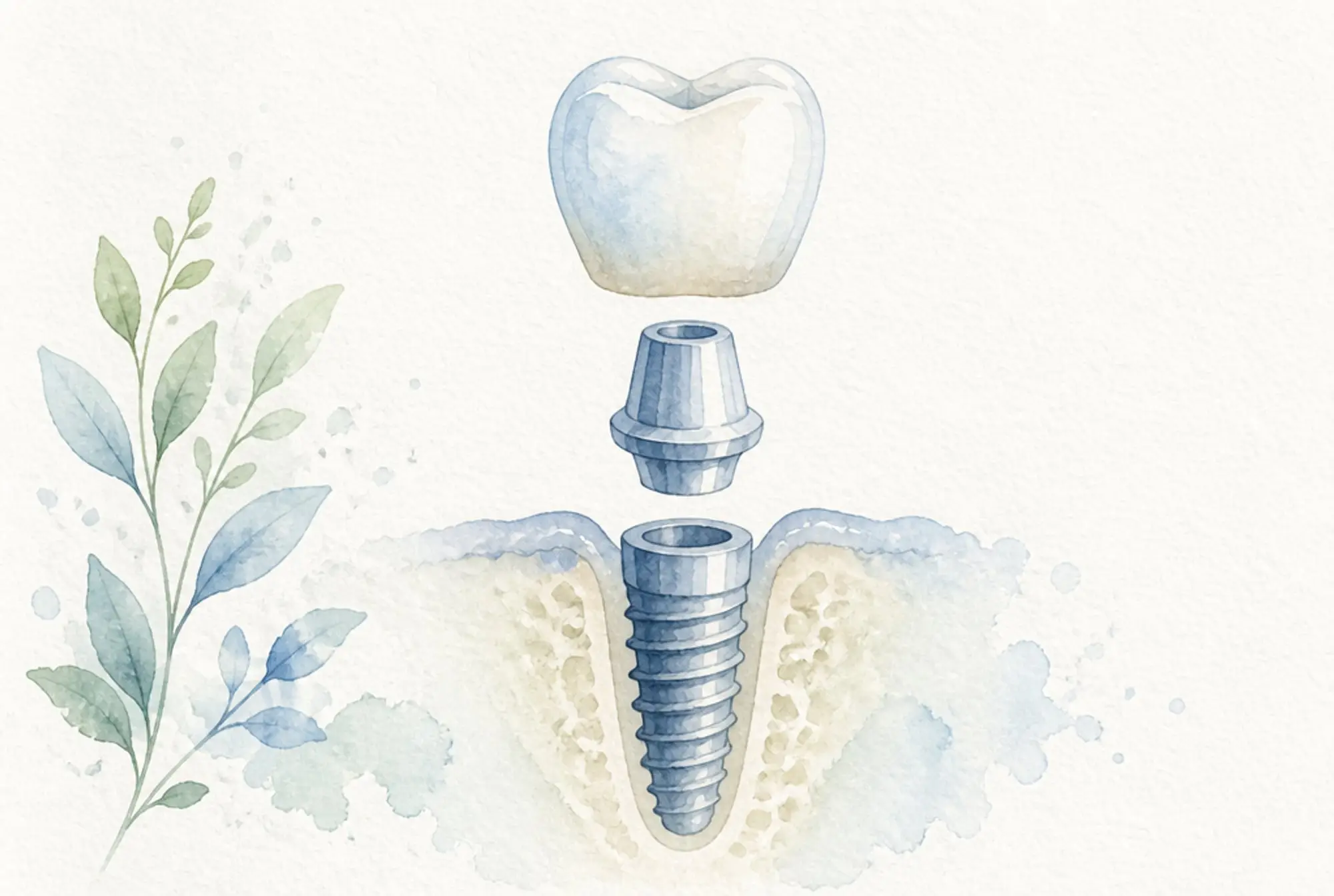
What we call “an implant” is really three components working together:
- The implant fixture. This is the titanium post inserted into the jawbone, where it stands in for the root of a natural tooth. Because it is biocompatible and able to fuse with bone, the fixture becomes the stable foundation that everything above it depends on.
- The abutment. The abutment is the connector. It attaches to the fixture, sits just above the gumline, and provides the support for the final restoration.
- The prosthetic tooth. The visible part is made of a durable material such as porcelain and custom-designed to match your natural teeth in size, shape, and color. It is the only component anyone ever sees, and it is built to blend in.
The same three-part design works whether you are replacing a single tooth or restoring several as part of a full mouth reconstruction plan.
How the pieces come together
The process begins with a thorough examination, including X-rays, so Dr. Balaban can assess your bone density and identify the best placement for the implant. During the surgical phase, he places the fixture into the jawbone. Then comes the quietest and longest stretch: over the next few months, the fixture and the bone fuse together in a process called osseointegration. You are simply healing during this time, not sitting in a chair.
Once that fusion is complete, the abutment is attached to the fixture, and the final step is fitting the custom prosthetic tooth onto the abutment. The restoration is then done, from root to crown.
Why the design works so well
Each component earns its place, and together they explain the advantages patients notice:
- A permanent solution. Unlike removable dentures, an implant offers a stable, lasting answer to missing teeth.
- Natural appearance and function. Because the design mirrors a real tooth, an implant closely mimics how natural teeth look and work, so eating and speaking feel normal.
- Jawbone preservation. The fixture keeps the bone stimulated, which helps prevent the bone loss that commonly follows tooth loss.
- Renewed confidence. A restoration that looks and feels like your own tooth tends to improve quality of life well beyond the mouth.
We look at these advantages in more depth in our post on the benefits of dental implants.
Talk it through with Dr. Balaban
Understanding how an implant is built is a good first step. The next one is a conversation about your own smile, your bone health, and your goals, at whatever pace feels right to you. Request an appointment with Dr. Balaban at Smile Arts Dental in Carmel and find out whether a dental implant is the right way to restore your confidence in your smile.
This article is for general education only and is not a substitute for professional dental advice. For guidance about your own smile, talk with your dentist.