
Dental implants can seem like the obvious way to replace a missing tooth, right up until the estimate arrives. Plenty of patients pause at that point, and the hesitation is reasonable. An implant costs more up front than other restorations, so it is fair to want certainty that it is the best long-term option before you commit.
That question deserves a straight answer rather than a sales pitch. Here is what an implant actually is, what the higher price is buying, and what the process honestly involves.
What an implant is, in plain terms
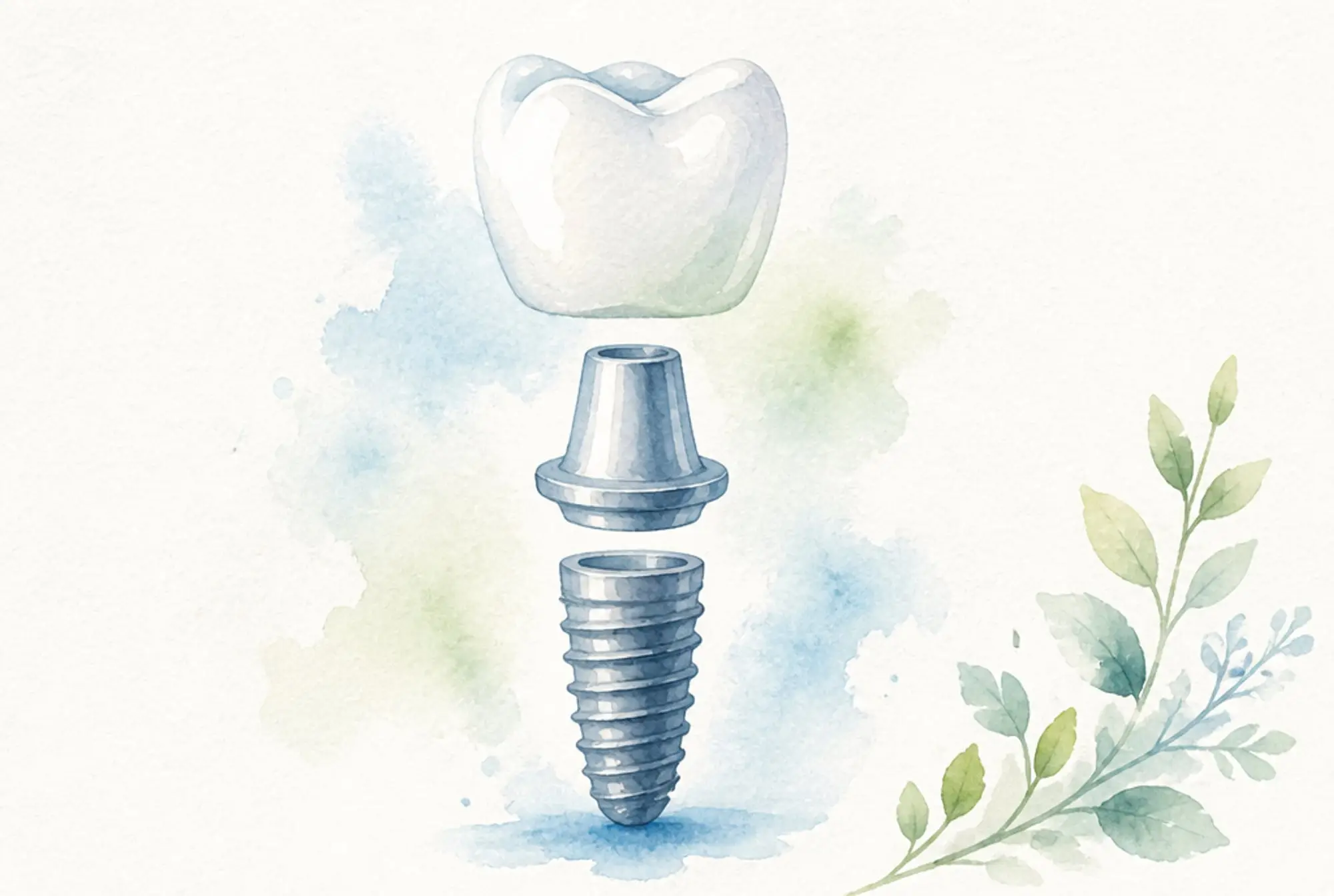
A dental implant looks like a small screw and is placed in the jawbone. Once the site heals from placement, your dentist attaches an abutment to the implant, and the crown that becomes your visible tooth fits on top of the abutment. Three parts, together doing the job a natural root and tooth used to do.
What the higher price is buying
When we recommend an implant, we are pointing at three long-term advantages.
Stability. Implants are made of strong metal and integrate into the jawbone the same way the roots of your natural teeth do. Once everything has healed, you can eat just about anything you want.
Jawbone health. The roots of your teeth anchor the jawbone in place. Without them, the bone begins to recede, which is why longtime denture wearers often have very thin jawbones. Thin bone can fracture more easily, and dentures are difficult to fit on a thin ridge. Because an implant integrates with the bone the way a root does, it works against that whole chain of problems instead of leaving it to run.
Simple upkeep. Daily home care is what keeps your jawbone and your remaining teeth healthy, and with an implant that care stays easy. You brush and floss as normal, with no special routine to learn.
A dental bridge or a denture can also restore a missing tooth, and for some patients one of those is the right call. We are glad to walk through every option with you. The three advantages above are the reason that, when a patient is free to choose, the long-term math tends to favor the implant.
An honest look at the timeline
An implant is not finished in a single visit, and it helps to know that going in. Start to finish can take a few months, because the schedule has to make room for several possible steps:
- An extraction, if the tooth is still present
- A bone graft, if there is not enough bone to support an implant
- Healing time once the implant is placed
- Lab time while a dental technician fabricates the crown
If implants are being used along with dentures, plan on additional time. None of these steps is rushed, and none of them should be. If the surgical part of this made you tense, say so when you call. Comfort comes first here, and Fear-Less Dentistry is the idea this practice is built on.
Finding out whether an implant fits you
Dr. Alex Balaban is a member of the Perio Institute of Implantology, and he takes both his continuing education and his patients’ needs seriously. The recommendation you get will be current, specific to your mouth, and honest about whether an implant is the right investment for you.
If you are weighing an implant against the alternatives, come talk it through. Request an appointment online or call (317) 575-1995 to find out whether you are a good candidate for this procedure.
This article is for general education only and is not a substitute for professional dental advice. For guidance about your own smile, talk with your dentist.